Table of Contents
A wedding is not just a celebration, it's a whole marathon of emotions, events, and unforgettable moments. One of the most important aspects of a successful wedding is a well-crafted timeline for the wedding day. Proper time management will allow you to enjoy every moment of your special day without rushing or feeling stressed. In this article, we will thoroughly explore how to organize your wedding day from sunrise to sunset so that everything goes smoothly and beautifully.
Why is wedding day timing so important?
Many couples underestimate the importance of temporal planning, and this becomes the main cause of stress on the wedding day. According to Brides Magazine, A lack of a clear timeline is among the top 5 causes of wedding day stress, alongside the weather and guest lateness. When you have a clear plan, you know exactly what's happening and when. This is especially relevant for mixed Franco-Russian weddings, where the traditions of two cultures intertwine, creating a richer program than a classic French celebration.
A well-thought-out wedding day timeline helps:
- Avoid being late and rushing
- Ensure guest comfort
- Give enough time to the wedding photographer and videographer for quality work
- Enjoy every stage of the celebration
Bride's Morning: Preparing for the Ceremony
The day begins much earlier than many imagine. The bride's preparation is the first and one of the most exciting stages of the wedding, setting the tone for the entire day.
How much time is needed for preparation?
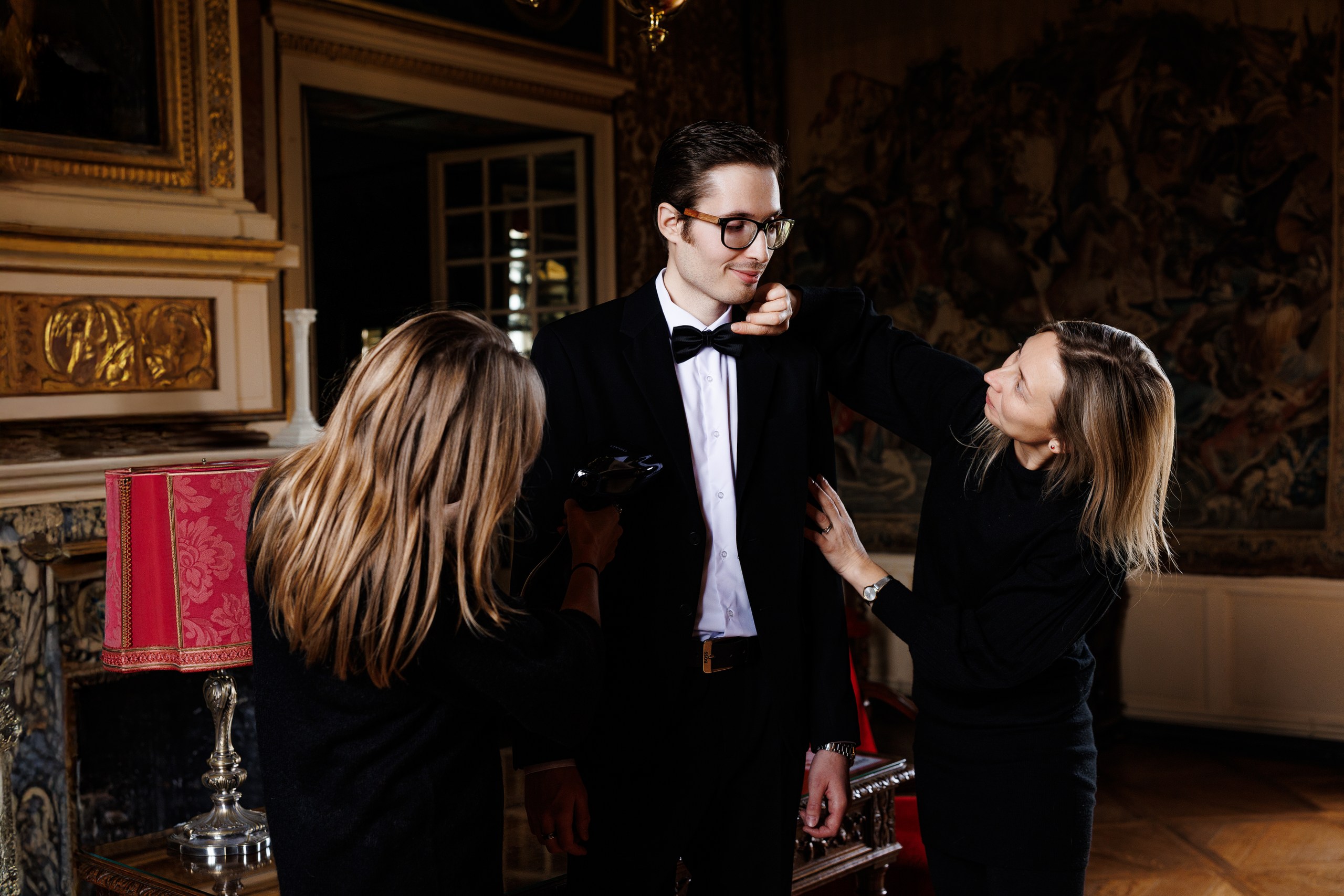
To create wedding hairstyle And for makeup, you should allocate from two to three hours. These are not just cosmetic procedures — this is a true art, requiring time and attention to detail. Be sure to clarify the exact timing with your specialists, as the complexity of hairstyling and makeup can vary.
Additionally, add at least an hour for the getting-ready photoshoot. These shots are among the most touching and candid in a wedding album: the bride in her robe with a glass of champagne, and her bridesmaids helping her get dressed. wedding dress, tender moments with mom. Such photos convey the atmosphere of the morning and the excitement before the main event.
Counting backwards
Let's count with a specific example. If a trip to the city hall or church is planned for 11:00 AM, then preparations should begin at 7:00 AM. Yes, it's early, but believe me, time will fly by, and it's better to have some buffer than to rush nervously at the last minute.
Choosing a preparation location
An important nuance: choose a spacious and beautiful place for morning preparations. Many couples rent an apartment or a hotel room specifically for this. The space should be bright (critical for the makeup artist), with good windows for photos, and large enough to accommodate the bride, beauty specialists, bridesmaids, and the photographer.
The newlyweds' first meeting
Think about the direction of the first meeting in advance: when will the groom first see the bride? There are two main options:
- TraditionalThe groom only sees the bride at the town hall or church – dramatic and exciting
- ModernThe groom arrives at the bride's home, and you have time for personal photos before the ceremony—a more relaxed option
Both approaches have their advantages; choose whichever resonates more with you.
Ceremony: Formal part
This is the official and most touching moment of the wedding, when you exchange vows and become a family.
Wedding ceremony or civil registration?
The duration of the ceremony depends heavily on its format:
- Church wedding It takes about an hour. It is a beautiful, symbolism-filled rite that requires time and attention.
- Painting in the mayor's office — a more concise option, with only 20 minutes for the official part.
Some couples choose both options, first having the official registration and then the church wedding. In this case, time must be allocated for travel and a short break between ceremonies.
For many couples, the moment of the ceremony is the first time the newlyweds see each other in their wedding attire. The emotions of this moment are priceless, and your photographer will definitely capture them.
Photoshoot: Time for beautiful shots
This is the stage that is often not allocated enough time for, and then regretted. High-quality wedding photos require time, and rushing the photographer means depriving yourself of beautiful shots.
Couple's Photoshoot
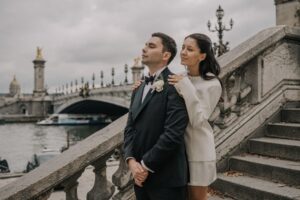
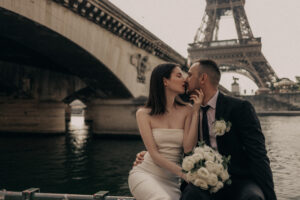
Set aside at least 40 minutes, or even a full hour, solely for the newlyweds' photoshoot. This is your time to be alone together, relax a bit from the hustle and bustle, and create the most romantic and staged shots. Wedding photographer uses this time to shoot in different locations, experiment with angles and lighting.
Group photos with guests
This is where the unique nature of mixed weddings is most evident. Unlike classic French celebrations, where the focus is on the couple, Russian tradition involves many group photos with relatives and friends.
It is important to organize this process competently:
- Create a list of mandatory group photos in advance.
- Assign an assistant (this role is often taken by wedding witness), who will gather the right people
- Allow 30-40 minutes for all group photos
What are the guests doing?
While the newlyweds are having their photoshoot, guests shouldn't be bored. Here are a few options:
- Invite a separate photographer for the guests
- Organize a walk in a beautiful location
- Have a photoshoot at a château or another picturesque location.
- Offer light snacks and drinks in the welcome zone
Transportation logistics
Don't forget to consider how guests will get from the ceremony to the reception venue. Options:
- An organized bus is convenient for everyone; no one will get lost.
- Individual transfer for elderly relatives
- Personal vehicle coordination with maps and navigation
Banquet: The culmination of the celebration
A banquet is the final and longest part of a wedding, where all the elements of the celebration come together.
Banquet structure
Usually, the banquet begins with a small symbolic ceremony – this could be an outdoor ceremony, an exchange of vows in Russian and French, or another touching ritual. After this, the following takes place:
Dinner — it's time to enjoy exquisite dishes and the first toasts. Dinner usually takes 1.5-2 hours.
Program host contests, games, congratulations from guests, musical performances. A good host senses the mood of the audience and flexibly manages the program.
Cake — one of the most photogenic moments of the evening. The cake cutting usually happens after the main dinner but before the active dancing begins.
Discotheque — the final chord of the wedding, when everyone relaxes and dances until morning. Allow at least 2-3 hours for the dancing portion.
Helpful planning tips
Wedding day duration
Be prepared for the wedding day to last from seven in the morning until one in the morning, and sometimes even longer. It's a real marathon that requires physical and emotional strength.
Don't forget to eat
Most important advice: don't forget to eat! In the hustle and bustle of the day, newlyweds often skip meals and feel exhausted by evening. Ask someone close to you to make sure you always have a plate of food.
Task delegation
If you have wedding planner — Trust him completely. If you organize the celebration yourself, be sure to delegate tasks to assistants. On your wedding day, you should be the bride and groom, not the event coordinators.
Use the service full wedding planning, if you want to completely free yourself from organizational hassles on the day of the celebration.
Working with Contractors
Be sure to inform your photographer and videographer about the actual length of your day. Franco-Russian weddings typically last 12-14 hours instead of the standard 10. This means:
- A review of service costs is required.
- The hotel may need to be paid for Wedding vendors (this is normal practice)
- Food needs to be provided for the specialists.
Include these expenses in the budget in advance to avoid unpleasant surprises.
Conclusion
Wedding day timing is the foundation upon which a perfect celebration is built. Proper time management helps avoid stress, allows you to enjoy every moment, and ensures comfort for all participants of the celebration.
Remember the main thing: the wedding is your day. Plan it in a way that reflects your personality and your desires. A well-thought-out timing is not a rigid schedule, but a flexible plan that helps you, rather than restricts you.
Enjoy every moment of your special day, entrust the organizational details to professionals or reliable assistants, and let your wedding become the happiest memory of your life!