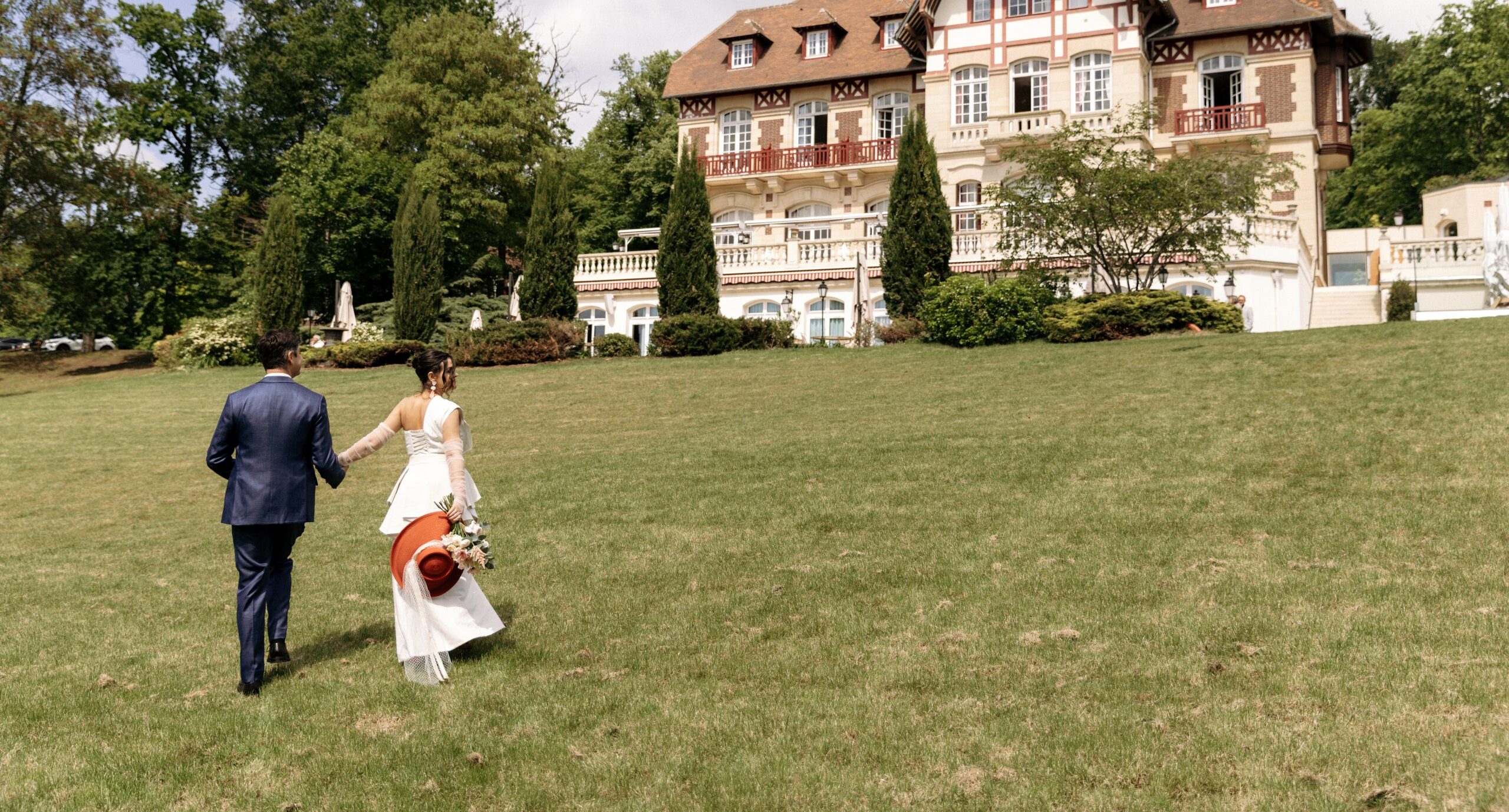
A wedding in a French château lives in the imagination of almost every couple planning a destination wedding: ancient stone walls, a park with centuries-old trees, a long table outdoors, glasses of champagne at sunset. The picture is so beautiful, it seems like something from another lifetime – only accessible to movie characters.
In practice, things are much more realistic than people tend to think. A huge number of genuine historical chateaux have been preserved in France, and many of them are still privately owned. Some of these estates are open for weddings, which means that «a day in a real French castle» ceases to be a fantasy and becomes a quite concrete task: choose a venue, check the conditions, assemble a team, and plan the logistics.
But this is where the story begins, the part rarely written about in beautiful Pinterest collections. Behind the flawless facade of every chateau lies its own internal workings – both literally and figuratively. Before falling in love with a photograph, it's important to check if the venue has a professional kitchen, until what time music can be played, if there will be enough matching chairs for all the guests, how invited guests will get to the castle at night, and where everyone will move if it rains. Our article is about this.
Why do couples choose to get married in a French château
France has long been one of the top destinations for destination weddings, and there are several reasons for this. Its historic architecture, world-class gastronomy, and the famous French art of living — The art of living beautifully and with taste — all combine to create an atmosphere that is difficult to replicate anywhere else. A castle wedding is not just about photos with ancient walls in the background, but a holistic experience: French cuisine, local wines, an aesthetic refined over centuries, French wedding traditions and the opportunity to spend a few days on a real estate.
For international couples, a wedding in France often ceases to be just a single celebration day. It transforms into a journey and a shared event for the entire family and guests who fly in from different countries to experience these days together. This is precisely why a French château is chosen not only for its picturesque setting but for the experience itself – rich, unhurried, and truly memorable.
A real historic château is not a set piece
One of the main advantages of France is that you can rent authentic 16th-18th century chateaux – buildings with real centuries-old history. Many of them still belong to families who live within these walls or manage the estate from generation to generation. When you have a wedding in such a place, you become part of its history, not just rent a backdrop.
This is a fundamentally different experience compared to a modern wedding venue styled to look like a castle. In a real château, you can feel the patina of time: uneven stone, creaking parquet floors, portraits of ancestors on the walls, and a park laid out several centuries ago. This authenticity cannot be recreated—it either exists or it doesn’t.
Not everything that's called a château is a historic castle
It is important to make a caveat here, which is rarely spoken about openly. The word castle In France, the term is used much more broadly than it might seem from the outside, and not everything that goes by that name is actually a historic castle.
Sites can be broadly divided into two categories. The first includes authentic historical chateaux from the 16th-18th centuries with documented pasts. The second includes large estates, often built in the 19th century or even later, which today use the word castle more like a commercial name and a successful marketing image. Both options can be very beautiful, but they give a completely different aesthetic and atmosphere.
That’s why, even before choosing a venue, the couple should honestly ask themselves: What exactly is important to them—historical authenticity with all its unique features and limitations, or a more spacious, modern venue designed specifically for weddings? A great deal depends on this answer, including the budget and the level of organizational complexity.
How much does it cost to rent a chateau in France?
Talking about money usually causes the most anxiety, so it’s important to distinguish right away between two concepts: the cost of renting the venue itself and the overall wedding budget. These are not the same thing, and confusing them can lead to unpleasant surprises.
Regarding renting a château, the estimated price range is from 5,000 to 15,000 euros. The final figure depends on the region, the venue's prestige, the season, the day of the week, and what is specifically included in the rental. Moreover, French châteaux often turn out to be a relatively affordable option among prestigious European destinations for a destination wedding. In some cases, renting a genuine historic château in France is more cost-effective than a comparable venue in Italy or Great Britain, while the level of experience remains just as high.
But renting the venue is just the beginning of the budget. To get the full picture, you need to look at the entire wedding budget, which we’ll discuss below.
Accommodation in a chateau: with and without lodging are different formats
One of the first practical questions that many overlook during the initial excitement about photos: is it even possible to spend the night in this chateau, and who exactly will have enough space.
The formats vary greatly. Some chateaux offer exclusively grounds and banquet spaces — beautiful halls and a park, but without bedrooms. Others have several rooms for the couple and immediate family. There are estates where guests are accommodated not in the historic building itself, but in a wing, guest house, or separate annex — which can also be charming, but it's worth understanding this in advance.
If a couple dreams of having a full wedding weekend in one place, with everyone nearby and no one traveling around, the accommodation issue needs to be checked at the château selection stage, not after signing the contract.
Location of the Château and Guest Accommodations
Many historical châteaux are located in small villages and the picturesque countryside of the Paris region and Normandy — and that's their special charm. But this beauty has a downside: the nearest hotels can be several kilometers, and sometimes several tens of kilometers, away from the site.
This means you can’t put off arranging accommodations for your guests. You need to figure out in advance where your guests will stay, how many accommodations are available in the area, how well these options match the wedding’s style, and how convenient it is to get from there to the chateau. Sometimes, the availability of nearby accommodations is the deciding factor when choosing between two beautiful venues.
Guest transportation is not a minor detail, but part of wedding organization.
Continuing with the same theme, something that's barely considered until it's too late. In the French countryside at night, it's practically impossible to count on a spontaneous taxi call – services like the urban aggregators might simply not be available here, and the local taxis are long asleep.
Therefore, for a wedding at a chateau, transportation is planned carefully and in advance: buses, minivans, or private cars are booked to shuttle guests between hotels and the venue. It's especially important not to forget about return transportation after the banquet – the moment when tired but happy guests need to get back to their beds peacefully. Well-organized transportation isn't just a detail; it's one of the elements that directly affects how guests remember the celebration.
Sound restrictions: not every château parties until morning
And this is where the real inner workings begin, which only those who actually work with French venues can see. Not every chateau allows celebrations until dawn.
If there are residential buildings or a village nearby, the venue may impose restrictions on music volume or require amplified sound to be turned off after a certain hour, such as after 11:00 PM or midnight. For a couple who dreamed of a late-night dance floor and an energetic DJ set until morning, this can be a significant disappointment. Therefore, the issue of sound restrictions should be clarified before signing the lease agreement, not in the middle of the evening when security approaches the DJ asking them to turn down the music. These limits should be factored in beforehand. Wedding day timeline, so that the climax of the evening falls within the permitted hours, and doesn't end at the most exciting part.
Historical heritage means strict rules
Authenticity comes with a price, and it's not just measured in money, but also in rules. Some chateaux are officially listed as protected historical heritage sites, so-called historic monuments, as registered by the Ministry of Culture of France, and this imposes quite specific restrictions.
In such places, there may be prohibitions on certain decor, open flames and candles, attaching structures to walls, installing lighting, moving antique furniture, and using specific rooms. Sometimes, every element of design and technical production needs to be agreed upon in advance with the owners or managers. These are not whims—they are a concern for the building, which has survived several centuries and should survive many more. But for the couple and the organizer, this means that creative ideas should be reconciled with the reality of the venue at the earliest stage, rather than trying to adapt a ready-made concept to unexpectedly discovered prohibitions.
Catering and list of approved vendors
Another question that is resolved long before tastings and menu selection. Some chateaux allow you to work with any professional caterer of your choice. Others have their own partners or a closed list of recommended contractors, beyond which you cannot go.
Additionally, it's important to check the technical aspects in advance: is there a professional kitchen on-site, an equipped catering area, refrigeration equipment, and utility rooms? A beautiful 17th-century hall might be completely unsuitable for preparing and serving dinner for a hundred people, and then all the infrastructure will have to be brought in and set up from scratch, which directly impacts both the budget and the logistics of the day.
Furniture is not always included in the rental price.
A detail that sounds almost absurd to a beginner, but is constantly encountered in practice. Even a luxurious historic château might simply not have enough identical tables and chairs for a wedding banquet.
As a result, furniture, textiles, tableware, glassware, and some technical equipment often have to be rented separately. Individually, these items may seem like small things, but in total they form a significant budget item that is best to be aware of in advance. Asking what exactly is included in the venue rental and what needs to be brought is one of the most useful questions at the very first meeting.
A rain plan B is mandatory
French chateaux are often chosen specifically for their park, garden, terrace, and outdoor ceremony options – and this is completely understandable. However, the weather in France remains unpredictable, and relying solely on sunshine would be naive.
Even before booking a venue, you need to clearly understand where the ceremony, cocktail hour, and reception will take place if it rains. It's crucial that Plan B isn't a dismal «emergency option» in a utility room, but a full-fledged, beautiful alternative where you wouldn't mind spending your wedding day. A good venue can always offer a worthy backup solution, and if such a solution doesn't exist, that in itself is a reason to pause and reconsider.
Territory features: grass, gravel, and old stairs
A wedding in a French château almost always involves moving around the grounds: lawns, gravel paths, and sometimes steep historical staircases. It's ideal for romantic photos, but a real challenge for stiletto heels.
This is something to think about in advance—both when choosing shoes for the bride and for the guests. You can gently warn guests about the nature of the terrain in the invitation or prepare extra, more comfortable shoes for the outdoor portion of the celebration. It's a small detail that prevents ruined moods and also protects beautiful outfits.
A chateau wedding is best experienced as a weekend event.
If you put all of the above together, it becomes clear: one evening is not enough for a French château. Such a place truly reveals itself in the format of a wedding weekend.
A welcome dinner on Friday, the wedding day on Saturday, and a leisurely brunch on Sunday allow guests to truly experience the atmosphere of France, rather than just passing through it for a few hours. For a destination wedding, this is a key shift: the wedding ceases to be just one celebratory evening and transforms into a shared journey, a lifetime experience, which family and friends will remember for years to come. And it's for this reason that all the organizational complexities mentioned above are worth overcoming.
What budget should be allocated for a wedding in a château in France
Let's get back to the money – with the full picture now. For a proper château wedding, it's reasonable to expect a total budget of at least 30,000 euros. We'll emphasize this again: this is not the cost of renting the venue, but the budget for the entire event.
The final sum is made up of many components: the number of guests, the level of the chateau, accommodation, catering, decor, technical equipment, lighting and sound, transfers, and the format of the wedding weekend. Understanding what makes up this figure removes most of the anxiety: you can see where you can save money without sacrificing quality, and where saving money will lead to problems at the most inconvenient time.
Output
Despite all the organizational peculiarities, a wedding in a French château can become one of the most memorable events in life. A true historical place, French aesthetics, and the opportunity to gather your loved ones for several days create an experience that cannot be fully replicated in an ordinary banquet hall.
But behind a beautiful facade, you always need to check the kitchen, the sound system, the chairs, the transport, and a plan B. Choosing a château requires knowledge of local specifics: venue limitations, rural logistics, peculiarities of French contractors, and the strict rules of historical sites. This is precisely why for an international or multicultural wedding it is so important working with a wedding planner in France, A person on-site speaks the same language and adheres to the French system, along with the couple's expectations. Then the fairy tale truly becomes a reality—without unpleasant surprises and with every right to enjoy every moment.