France is a country associated with romance, elegance, and refined taste. It's no wonder that French wedding traditions are distinguished by their special sophistication and deep symbolism. For couples planning a Franco-Russian wedding or simply wishing to add French charm to their celebration, understanding these traditions will open up new possibilities for creating an unforgettable event. In this article, we will detail how weddings are conducted in France, which customs are observed, and how they can be adapted for a modern celebration.
The history of French wedding traditions
French wedding traditions have been shaped over centuries, absorbing influences from the Catholic Church, aristocratic customs, and folk culture. Unlike in many other countries, traditions in France have evolved slowly and organically, maintaining a balance between conservatism and modernity.
Historically, a French wedding was less a romantic event and more a legal and economic transaction between families. Marriages in aristocratic circles were arranged to strengthen political alliances, while in peasant families, they were intended to consolidate landholdings. However, even within this practical approach, the French managed to find room for beauty and elegance.
Starting from the 18th century, the Age of Enlightenment, the emphasis began to shift towards love and personal choice. The 19th-century Romantic movement definitively established the concept of marriage as a union of loving hearts. It was then that many French wedding traditions took on the form we know them in today.
Legal aspect: The civil ceremony comes first
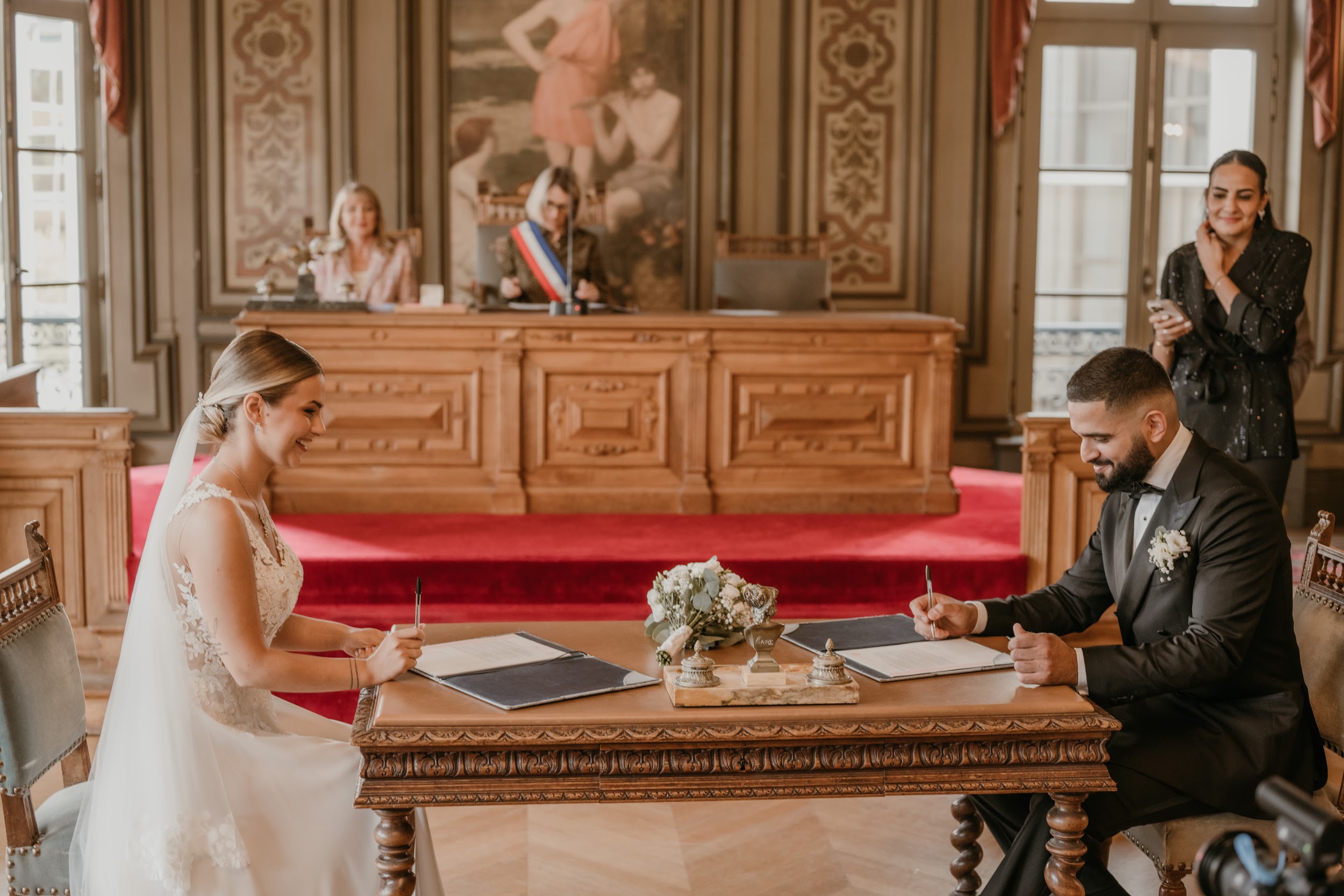
One of the main features of French wedding traditions is the absolute priority of the civil ceremony over the religious one. This feature dates back to the French Revolution of 1789, when the church was separated from the state.
Mandatory registration at the mayor's office
In France, only a civil marriage registered at the town hall (mairie) is legally recognized. The ceremony is conducted by the mayor (maire) or their deputy in a formal setting. Without this registration, the marriage has no legal standing, even if the couple has had a church wedding.
The civil ceremony is quite formal and lasts about 20-30 minutes. Articles of the Civil Code concerning the rights and obligations of spouses are read out, the newlyweds say «Oui» («Yes»), exchange rings, and sign documents in the presence of witnesses (témoins). By law, each of the newlyweds must have between one and four witnesses.
Interestingly, the French civil ceremony at the town hall is public - the doors of the hall are open to anyone. This reflects the republican principle of transparency in public acts.
Religious ceremony as an addition
If a couple wishes to marry in the church, it only happens after civil registration – usually on the same day, but later. The Catholic Church will not perform a wedding without proof of civil marriage. This is a fundamental difference from many other countries where a religious ceremony can have legal effect.
For Franco-Russian couples planning wedding in Paris, it is important to understand this peculiarity and to decide in advance whether they will have an official registration in France or limit themselves to a symbolic ceremony.
Pre-wedding traditions
French wedding traditions begin long before the celebration itself.
French engagement
In France, an engagement (fiançailles) is an important but less formal step than in some other cultures. Traditionally, the groom asks the bride's father for her hand, although in modern society this tradition is often simplified to simply notifying the parents.
An engagement ring is usually worn on the ring finger of the left hand. After the wedding, the wedding ring is worn on the same finger, and both rings are worn together. However, many modern French couples forgo the engagement ring altogether, opting for only wedding rings.
It's interesting that in France very popular Marriage proposals in Paris — at the Eiffel Tower, on the bridges over the Seine, or in the city's romantic parks.
Bachelorette party and bachelor party
The French call a bachelorette party «enterrement de vie de jeune fille» (literally «funeral of a young girl's life»), and a bachelor party «enterrement de vie de garçon» («funeral of a bachelor's life»). These names sound dramatic, but in reality, they are fun celebrations with friends.
Unlike the American tradition, French bachelorette and bachelor parties are usually more restrained and elegant. Popular Romantic weekends in Paris or trips to wine regions, spa days, dinners at restaurants, rather than noisy parties at clubs.
Wedding registry — wish list
One of the most practical French wedding traditions is creating a *liste de mariage*, or gift registry. Couples register at one or more stores (traditionally Galeries Lafayette, Printemps, La Redoute, or specialized wedding boutiques), choose items they need, and guests can purchase something from that list.
This solves the problem of duplicate or unwanted gifts and helps guests with their choices. Invitations usually indicate where the registry is located, or guests can find out from Best man. Monetary gifts are also accepted and often preferred, especially if the couple is saving for a down payment on a home or for their honeymoon.
Wedding Day: Structure and Customs
French wedding traditions define a specific structure for the wedding day that differs from what Russian couples are accustomed to.
Bride's Morning
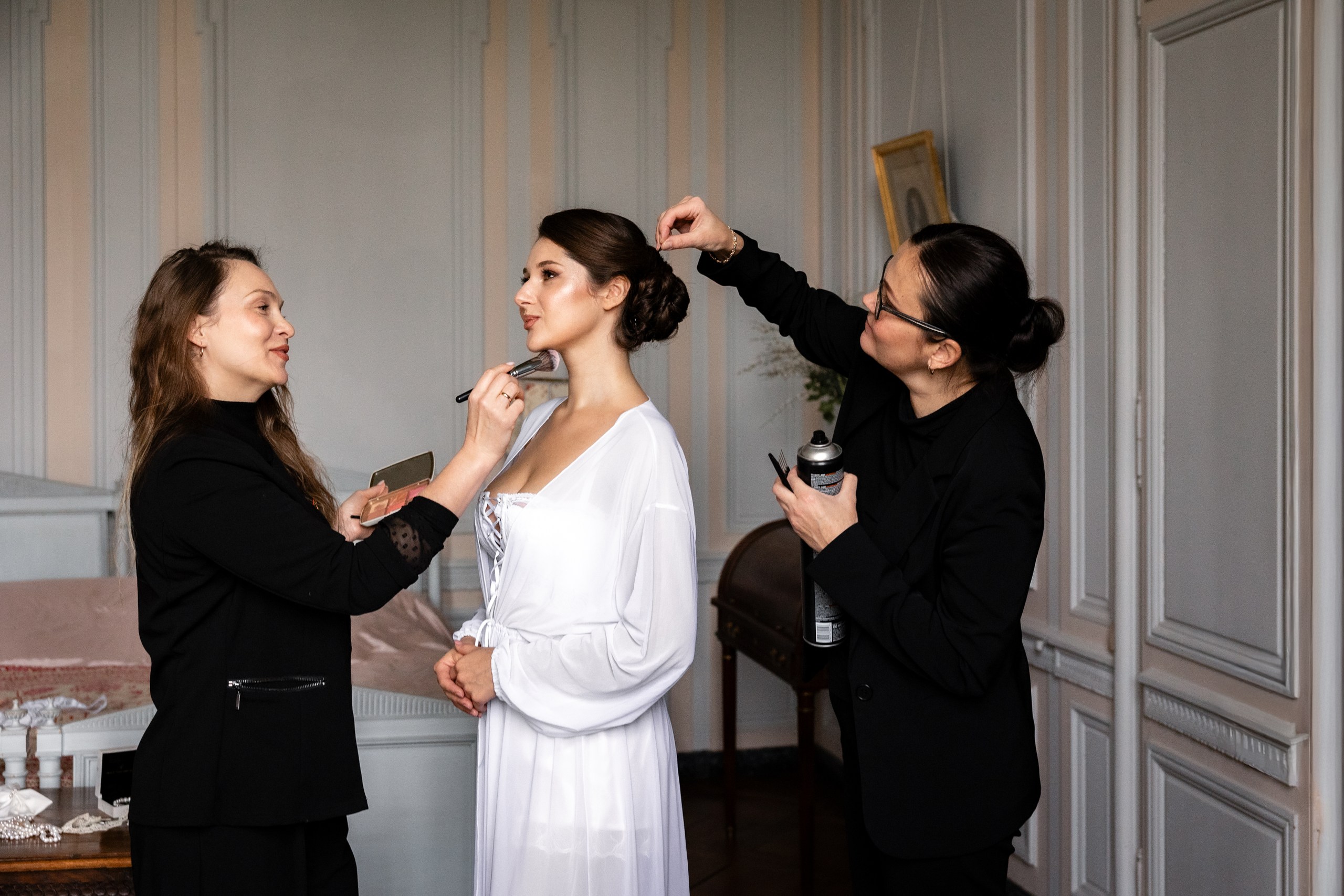
In the French tradition, the bride's morning is usually more relaxed than in the Russian tradition. The bride prepares at home or in a hotel with the help of close friends and a professional makeup artist. Wedding hairstyles French style often looks natural and slightly unkempt (the famous «French chic»), unlike more structured hairstyles in other cultures.
Traditionally, the groom should not see the bride in wedding dress before the ceremony — this superstition is observed in France as well.
City Hall ceremony
City Hall ceremonies are usually scheduled for the morning or early afternoon. Only the closest family and friends attend – parents, witnesses, and a few friends. Many couples come to City Hall in elegant everyday attire, saving their festive outfits for a religious ceremony or reception.
After the official part at the city hall, a small cocktail reception or a light gathering is often organized right in the square in front of the building. This is a moment for initial congratulations and photos.
Religious ceremony (optional)
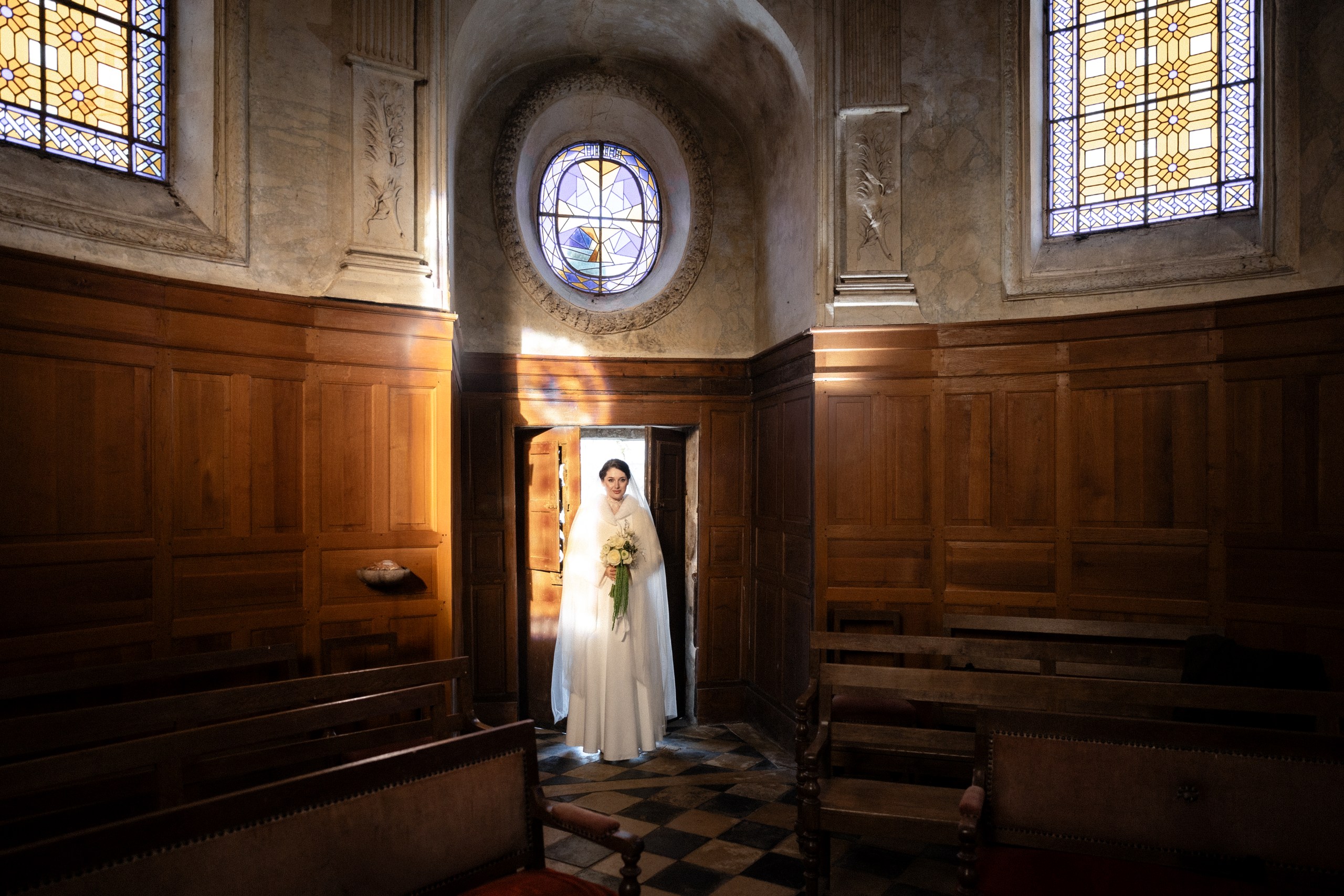
If a couple chooses a church wedding, it typically takes place a few hours after the civil ceremony at the registry office. A Catholic Mass can last an hour or more. The bride walks down the aisle with her father, who «gives her away» to the groom at the altar.
In France, there isn't a tradition of throwing rice or rose petals (it's often forbidden by churches for practical reasons), but guests might form a «tunnel» for the newlyweds as they exit the church.
Cocktail
One of the key French wedding traditions is the vin d'honneur, a cocktail reception held between the ceremony and the banquet. This is an outdoor reception (in the garden of a chateau, on a restaurant terrace, in a park) where champagne, wine, and light appetizers such as canapés, verrines, and mini-tarts are served.
The vin d'honneur lasts 1-2 hours and serves several purposes: it provides time for the newlyweds' photo session, allows guests to socialize in an informal setting, and creates a smooth transition to the evening banquet. The cocktail reception often includes more people than the banquet – colleagues, distant acquaintances, and neighbors.
Wedding dinner
A French wedding banquet is a work of art in itself. France is the country of haute cuisine, and this is reflected in the structure of the wedding dinner.
A typical menu includes 4-6 courses: an aperitif with amuse-bouches (small appetizers), a cold appetizer (often foie gras or seafood), a hot appetizer (fish), a main course (meat or poultry), cheese (a mandatory element!), and dessert. Between courses, there can be a «trou normand» – a shot of Calvados or sorbet to «cleanse» the palate.
Wine is paired with each dish, which is an important part of French gastronomic culture. Champagne is served at the beginning and when cutting the cake.
An important difference from Russian weddings: the French banquet is more structured and calm. There is no tradition of shouting «Gorko!» (Bitters!), fewer contests and activities. The emphasis is on the quality of food, wine, and relaxed conversations. Wedding Host & MC plays a more modest role in the French style than at Russian celebrations.
Pièce montée instead of cake
The traditional French wedding dessert is not the cake we are accustomed to, but a pièce montée (literally «assembled item») – a tower of profiteroles held together with caramel. The profiteroles are filled with cream (usually vanilla or chocolate) and arranged in a pyramid, decorated with caramel threads, sugar flowers, or macarons.
However, modern couples often choose classic cakes or combine both options. The cake cutting (or pièce montée) takes place after dinner and is accompanied by guests' applause.
Dancing and fun
The dancing portion begins after dinner. The newlyweds' first dance (première danse) is a mandatory tradition. It's usually a slow, romantic dance, after which the parents join the couple, followed by the witnesses, and finally all the guests.
French weddings usually last until late at night or even into the morning. The music ranges from classical melodies to modern hits, often with a live band or DJ.
Symbols and Omens
French wedding traditions include many symbols and omens, some of which are still observed today.
Colors and their meanings
White is the classic bridal color, symbolizing purity. In France, white wedding dresses became popular after Empress Eugénie's wedding in 1853. Blue is the color of fidelity (hence the tradition of «something blue»). Pink is a symbol of happiness and joy. Green is considered an unlucky color for a wedding (an old superstition is related to jealousy).
«Something old, something new, something borrowed, and something blue»
This tradition, though of English origin, is also popular in France. The bride must have: something old (a connection to the past, often a family heirloom), something new (a symbol of the future), something borrowed (happiness from a happily married friend), something blue (fidelity).
The garter — the bride's garter
The garter tradition has medieval roots. At the end of the evening, the groom removes the garter from the bride's leg (often with his teeth, which amuses the guests) and throws it to the unmarried men. Whoever catches it is believed to get married next.
Modern French couples often skip this tradition, considering it too frivolous, but it is still found at traditional weddings.
Sugar-coated almonds
One of the oldest French wedding traditions is to give guests dragées, almonds coated in sugar glaze. These candies symbolize the balance of life: the almond is bitter, and the sugar is sweet. An odd number (usually five) is traditionally given, symbolizing health, wealth, longevity, happiness, and fertility.
Dragées are packaged in small tulle or organza bags and given to each guest as a keepsake. This is an essential element of a French wedding.
The role of family and witnesses
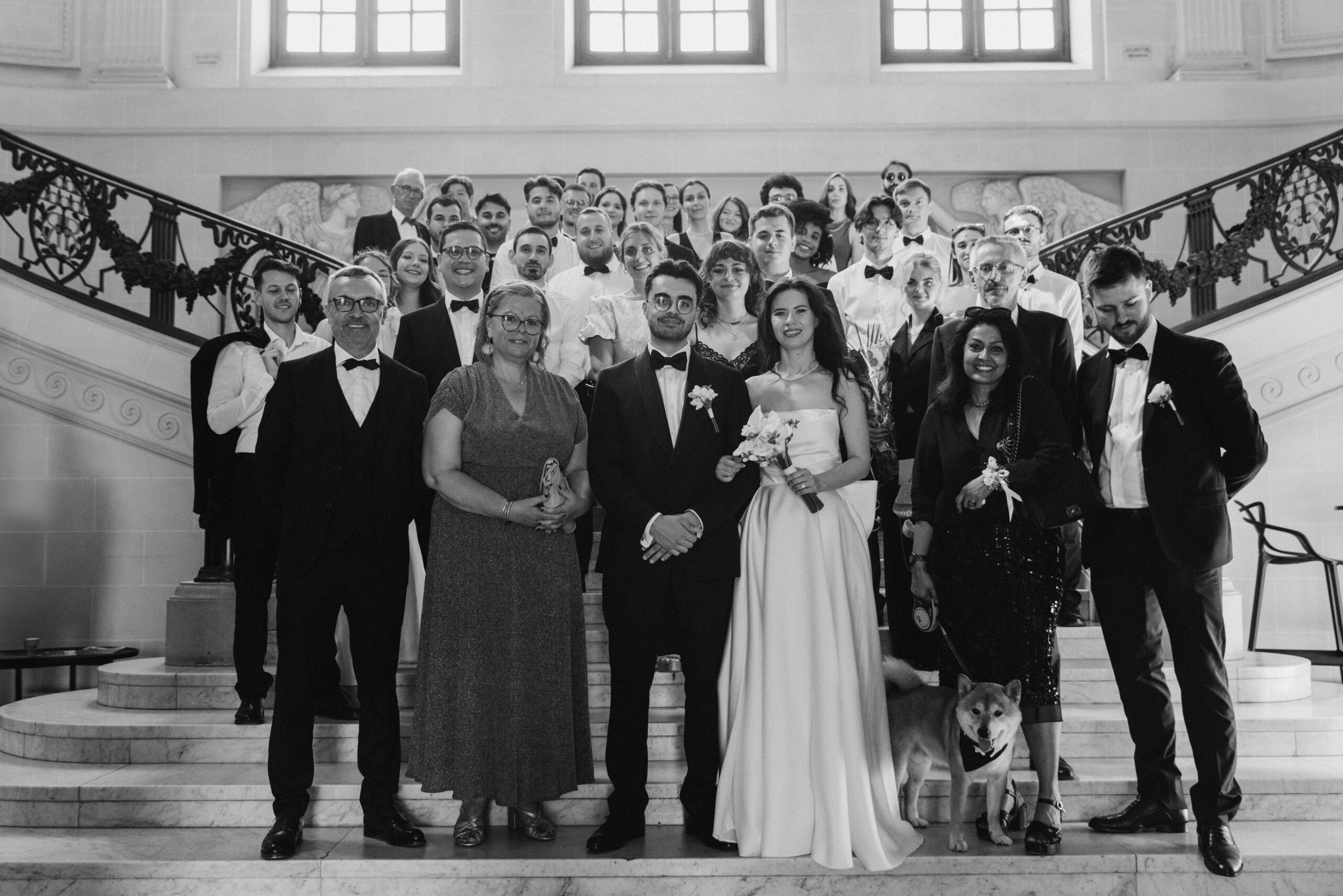
French wedding traditions place particular importance on the roles of family and witnesses.
The parents of the newlyweds
In France, the bride's father traditionally walks his daughter down the aisle and «gives her away» to the groom. This moment symbolizes the bride's transition from her birth family to her new family. The bride's mother and the groom's parents occupy honored seats during the ceremony and at the reception hall.
Parents often give speeches during the banquet, expressing their joy and wishes to the newlyweds. These speeches are usually short, touching, and emotional.
Witnesses
Witnesses play an important legal role in a civil ceremony; they sign documents along with the newlyweds. However, their role is not limited to formalities. Witnesses are usually the newlyweds' best friends who help organize the wedding, give speeches at the reception, and support the couple throughout the day.
Unlike the Russian tradition, where witnesses actively participate in contests and entertainment, French témoins play a more reserved role. Their main task is to be by the newlyweds' side and ensure their comfort.
Regional differences
France is a country with rich regional traditions, and wedding customs vary depending on the region.
Provence
In Provence, weddings are often held outdoors, in lavender fields or vineyards. Traditionally, the bride wears a wreath of fresh herbs, and lavender is actively used in the decor. After the ceremony, the newlyweds can plant an olive tree – a symbol of peace and prosperity.
Brittany
Celtic traditions are preserved in Brittany. Brides sometimes wear traditional Breton headdresses (coiffes), and Breton music with bagpipes is played at weddings. The gavotte dance is the traditional first dance at Breton weddings.
Alsace
Alsatian weddings are influenced by German culture. The tradition of «Bachelor party»A noisy pre-wedding party with the smashing of dishes (believed to bring good luck).
Modern French Weddings
Modern French wedding traditions are evolving, maintaining a balance between honoring the past and embracing the new.
Eclectic
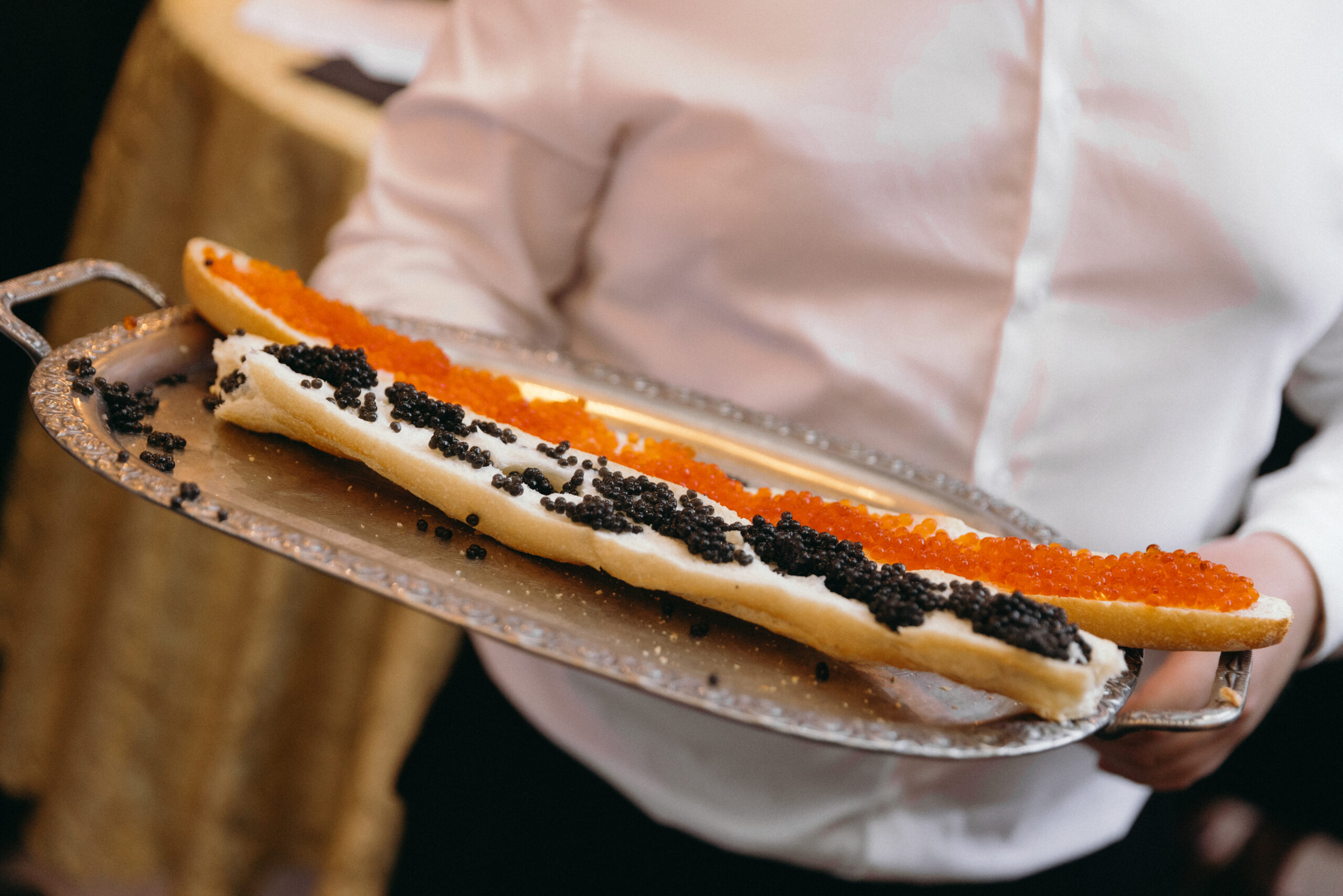
Franco-Russian couples often create a unique synthesis of traditions from both cultures. An official ceremony at the mayor's office, in the French style, can be combined with a more emotional and lively banquet in the Russian style. Wedding planner, Specializing in Franco-Russian celebrations, they will help harmoniously combine different traditions.
Environmental awareness
Many modern French couples are choosing eco-friendly weddings: local seasonal products, minimal plastic, flowers from local farmers, vintage decor instead of disposable items. This reflects the growing environmental consciousness of French society.
Personalization
The French are increasingly moving away from strict traditions in favor of personalization. Couples are creating unique ceremonies that reflect their love story, choosing non-traditional locations, and writing their own vows. However, certain elements—civil registration, quality cuisine, and elegance—remain unchanged.
French-Russian wedding planning
For couples combining French and Russian wedding traditions, meticulous planning is essential.
Timing and daily structure
French weddings are generally longer than Russian ones, but less intense. It is important to think about Wedding day timeline so as to take into account the features of both cultures: a formal ceremony in the morning, a long cocktail hour, a multi-course dinner lasting for hours, and dancing until the morning.
Budget
Wedding budget in France often higher than in Russia, especially in Paris. The French traditionally invest heavily in the quality of food, wine, and location. It is important to prioritize in advance and allocate the budget wisely.
Working with contractors
French wedding vendors value professionalism and punctuality. Wedding photographer In France, the work is usually more in a reportage style than in Russia, creating natural, lively shots. The service full wedding planning especially useful for couples unfamiliar with local customs.
Conclusion
French wedding traditions are a unique blend of elegance, practicality, and deep symbolism. From the mandatory civil registration at the town hall to the pièce montée, from the vin d’honneur to the dragées – each element has its own significance and creates the unique atmosphere of a French celebration.
For Franco-Russian couples, understanding these traditions opens up the possibility of creating a truly unique wedding that combines the best of both cultures. The elegance and sophistication of the French approach perfectly complement the emotionality and warmth of Russian traditions.
The main thing to remember is that traditions exist not to restrict, but to inspire. Choose what resonates with you, adapt it to your partner, and create your own love story, in which French wedding traditions will become a beautiful frame for your unique celebration.